ODF Complex Incident Management Teams
- ODF CIMT 1 is in command of the Fielder Mountain Fire and will transfer command back to the ODF Southwest Oregon District today at 6 p.m. Visit the ODF Southwest Oregon District Facebook page for updates.
- ODF CIMT 2 is in unified command with OSFM Red Team on the Rowe Creek Complex. Visit the incident Facebook page for updates.
- ODF CIMT 3 is on rest.
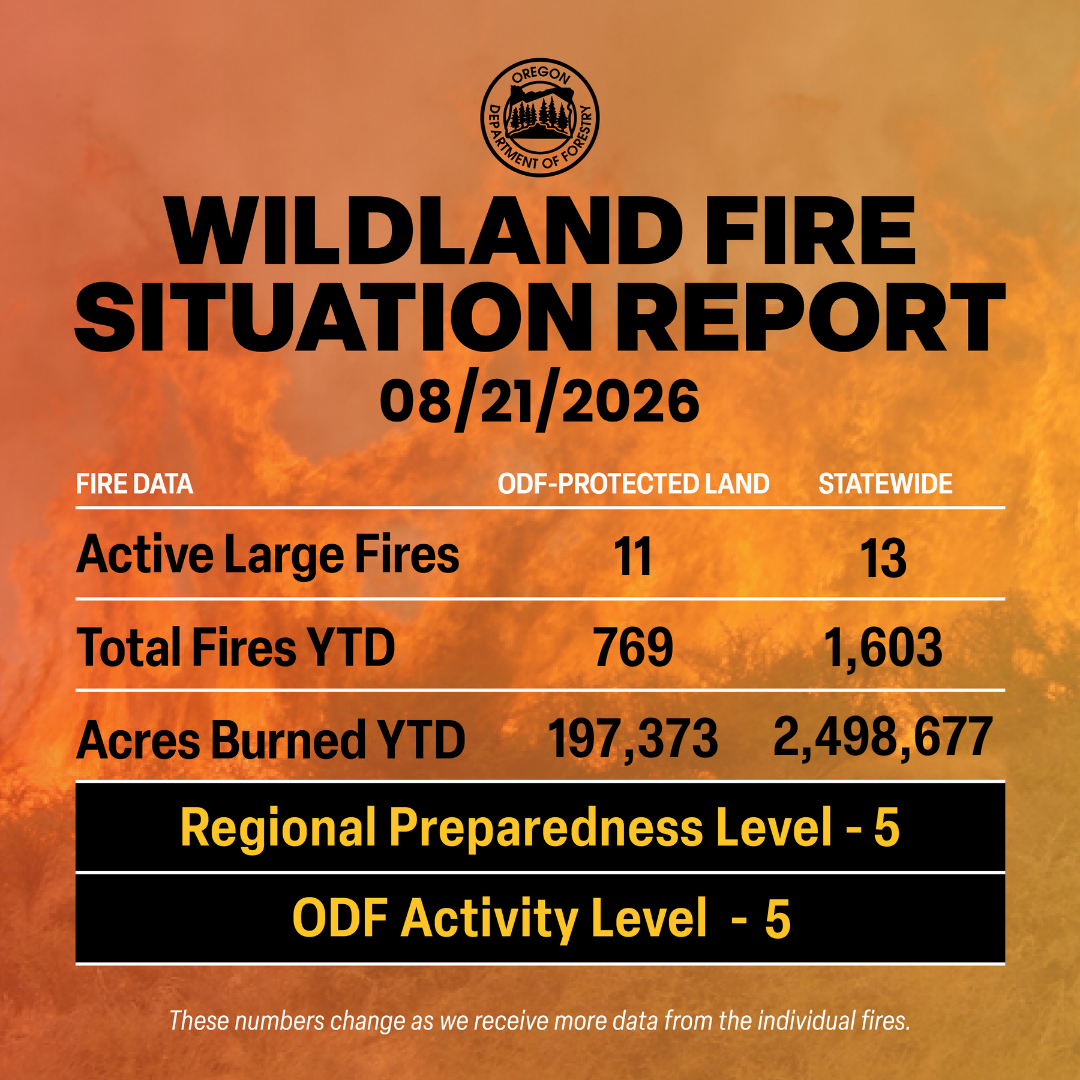
Current Large Fires with ODF Involvement (in priority order).
| FIRE NAME | TOTAL ACRES | ODF ACRES | CONTAINMENT | LOCATION | COMMAND |
| Grasshopper | 92,456 | 20,076 | 71% | 3 miles N of Sportsmans Park | SA Team 2 |
| Austin | 3,766 | TBD | 0% | 25 miles SE of Estacada | SA Team 2 |
| The Narrows | 174 | TBD | 0% | 15 miles SE of Estacada | SA Team 2 |
| Paradise | 7,928 | 69 | 0% | 18 miles E of Milton-Freewater | SA Team 3 |
| Hagen | 59,107 | 1,690 | 19% | 26 miles E of Pendleton | SA Team 3 |
| Cottonwood | 722 | 722 | 95% | 15 miles SW of Long Creek | ICT 3 |
| Bologna | 4,509 | 1,492 | 95% | 7 miles NE of Kimberly | ICT 3 |
| Rosenbaum | 483 | 483 | 89% | 4 miles NW of Service Creek | ICT 3 |
| Rowe Creek Complex | 373,981 | 97,065 | 89% | 10 miles S of Fossil | ODF CIMT 2 |
| Fielder Mountain | 573 | 573 | 81% | 4 miles SE of Grants Pass | ODF CIMT 1 (demobilizing today) |
| Wrights Spring | 54,131 | 12,883 | 55% | 2 miles SE of Sprague River | NW Team 7 |
*These numbers may change as we receive more data.
There are approximately 7,833 personnel assigned to the 13 large fires across the state, not including many of the local and agency government employees, landowners, forestland operators, and members of the community who are contributing every day.
Initial attack remains ODF’s top priority.
Prevention: As we already know, fire behavior this season is extremely active and continuously changing. Even as containment is rising on large wildfires, the region is still experiencing critical fire weather. Firefighters continue to work diligently and will do so until all fires are completely out. Now is NOT the time to become complacent.
Help your wildland firefighters by preventing the next human-caused wildfire. The easiest way to do this is by checking your local fire restrictions and brushing up on your wildfire prevention knowledge. Remain aware of weather conditions and any red flag warnings in your area. Sign up for emergency alerts at ORalert.gov.
Weather: Low pressure arriving today can bring thunderstorms nearly anywhere across the Geographic Area, though higher lightning counts are expected along the Cascades. Some storms may continue overnight. Moderate to strong mixing will support good smoke ventilation from the Cascade east slopes eastward. As the low pulls a cold front across the region Saturday, thunderstorm coverage will expand over most of eastern Washington and parts of eastern Oregon, creating a high ignition risk. Storms will generate little surface rain and may, again, continue overnight. Winds with and behind the front will surge eastward through the Cascade Gaps and across the eastern basins. Deep mixing will maintain strong smoke ventilation under unstable conditions, especially across eastern Oregon. Offshore low pressure will return early next week, keeping additional thunderstorm potential and at least locally breezy conditions in place.
Today’s Highlight: Firefighting is a physically demanding job. Tools and protective gear are heavy. The terrain on most fires is steep, rough and can be dangerous. Crews work long distances from emergency services, so medical care could be hours away.
On the Rowe Creek Complex, there are multiple Rapid Extraction Medical Support (REMS) teams. A REMS team is a specialized, highly trained medical and technical rescue unit assigned to wildland fire incidents. Their main job is to safely reach, stabilize, and evacuate injured or ill firefighters from steep, rugged, or remote terrain where standard ambulances cannot go.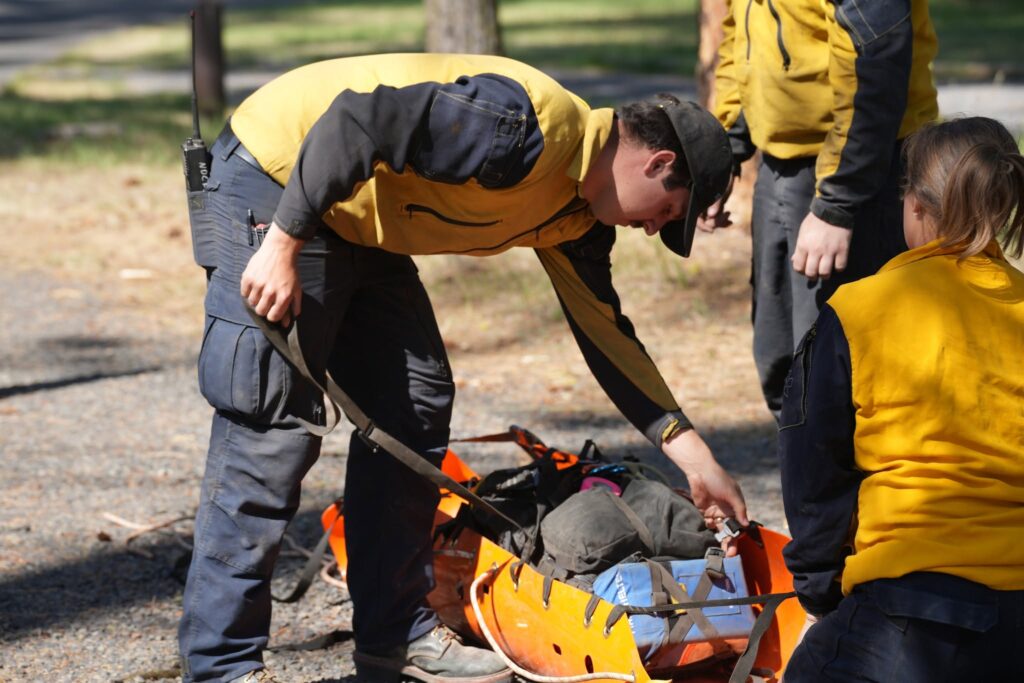
REMS Teams are made of certified EMTs or paramedics who can provide:
- Advanced Life Support on the fire line, perform specialized rope rescue systems to gain access to a patient.
- Technical rope rescue to access injured patients.
- Use all-terrain vehicles and coordinate helicopter hoists to transport patients.
- Scout and map safe medical access and extraction paths ahead of active fire.
Resources
- ODF wildfire blog and Public Fire Restrictions/Danger Levels map
- Regional situation report and national situation report
- Inciweb (information, photos, videos, and maps from specific incidents)